Where Fandom Is Born: The Rec League Pipeline Behind America's Team Loyalty
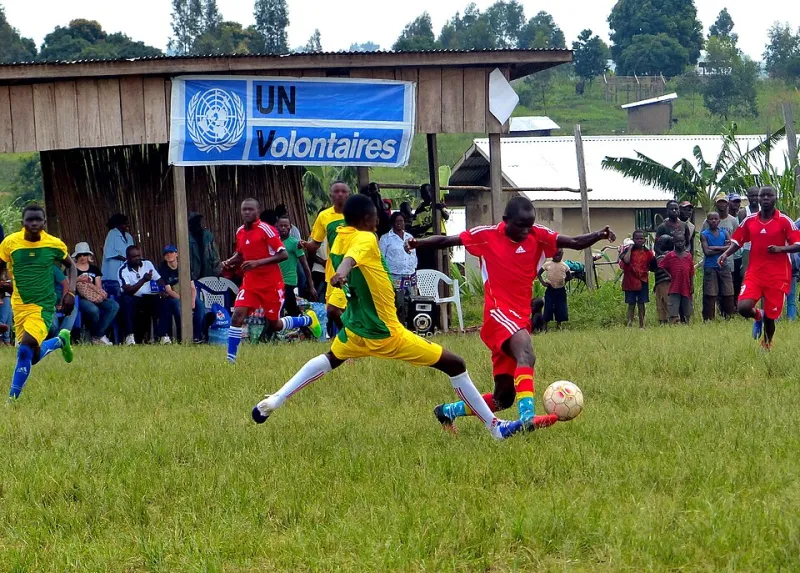
Photo: MONUSCO Photos, CC BY-SA 2.0, via Wikimedia Commons
Every Sunday from September through November, roughly 2.8 million American children put on a flag football jersey with a local sponsor's name ironed across the back — a hardware store, a dentist's office, a diner. Most of those jerseys will end up in a drawer by spring. But the attachment they represent will not.
Ask any die-hard fan over the age of thirty where their loyalty began, and the answer is rarely a televised game. It is a rec league, a church gymnasium, a town recreation department. The professional fandom economy that generates tens of billions of dollars annually in merchandise, tickets, and media is built on a foundation most of us never think to examine: the volunteer-run organizations that teach eight-year-olds to shake hands after a loss.
The First Jersey Problem
Sports psychologists have long observed what researchers call the "first jersey" effect — the tendency of fans to bond permanently with the first team identity they wear. For millions of Americans, that first jersey is not an NFL replica. It is a screen-printed cotton shirt from the Kwik Fill Squirts, and the bond it creates is not with a franchise but with the very idea of belonging to a team.
That distinction matters. The rec league does not manufacture loyalty to a brand; it manufactures the capacity for loyalty itself. The professional product arrives later and simply gives that capacity a place to land.
What the Numbers Show
Participation data from the Aspen Institute's Project Play initiative suggests that youth team sports participation in the United States has hovered between 53 and 57 percent of children for much of the past decade — a figure that masks significant divergence by household income. Among children from families earning under $25,000 annually, participation drops meaningfully, driven largely by fees, equipment costs, and transportation barriers.
Community-based leagues remain the most affordable entry point. A town-run recreational soccer program might cost $75 per season. The alternative — club and travel programs — can easily exceed $3,000 a year once tournament fees, hotel rooms, and private instruction are counted. As pay-to-play models expand, the pipeline feeding both future athletes and future fans grows narrower at the bottom.
Voices From the Sideline
"People think we're running a sports program," said a longtime volunteer commissioner of a Midwest youth baseball association, speaking at a regional governance summit last year. "We're running the first organization a kid ever joins that isn't their family or their school. That's a civic institution, whether anyone funds it like one or not."
Volunteers like her — often parents serving two- or three-year stints — manage the rosters, the field permits, the background checks, and the postgame snack schedules. The Aspen Institute estimates that volunteer coaches staff the overwhelming majority of youth sports programs nationwide, and turnover among them is chronic. When a league loses its volunteers, it does not merely lose games. It loses a community's cheapest and most effective mechanism for producing engaged citizens and, eventually, ticket buyers.
The Travel Ball Fork in the Road
The rise of travel and club programs has introduced a fork in the developmental road. Families with means increasingly bypass recreational leagues altogether, entering specialized circuits at age nine or ten. The result is a stratification that old-timers in youth sports describe with real grief: the town league, once the default, becomes the option for families who cannot opt out of it.
This matters for the fandom economy as much as for athletic development. A child who never plays alongside neighbors from different schools and neighborhoods has fewer civic threads connecting them to their community — and community attachment, research consistently shows, is a stronger predictor of lifelong team fandom than winning percentage ever was.
What Should Be Done
If the rec league is the true minor league of American fandom, it deserves the same intentionality that professional organizations devote to their academies. Three priorities stand out:
- Fee subsidy funds at the municipal level, so no child is turned away from a town program for cost.
- Volunteer pipelines, including high school community-service credit for assistant coaching roles.
- Recruitment of first-generation volunteers, ensuring leagues reflect the full diversity of the towns they serve.
Professional leagues have begun to notice — several now fund grassroots flag football and street hockey initiatives. But the deeper work remains local, unpaid, and unglamorous.
The next generation of season-ticket holders is currently standing in left field, losing track of the ball, while a volunteer coach yells encouragement from the bench. Whether that child grows up caring about sports at all may depend less on what happens in the professional arena than on whether the local league was there to hand them a jersey in the first place.