Broken Backstops and Buckled Courts: Auditing the State of America's Public Playing Fields
Photo: AKA MBG, Public domain, via Wikimedia Commons
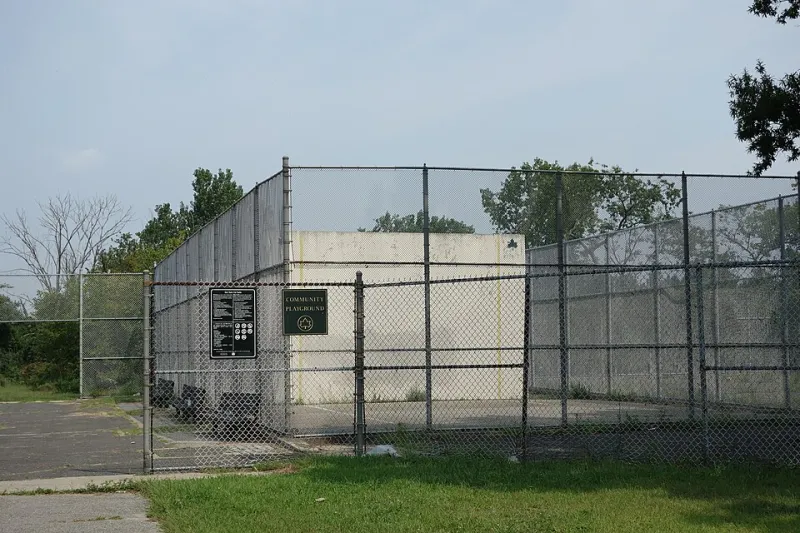
Drive through nearly any American town of moderate size and you will find it: the community ballpark with a chain-link backstop bent from a decade of foul tips, the basketball court with a hoop missing its net and half its rim, the soccer field that floods every April and stays soggy until June. Public athletic infrastructure in the United States is in a quiet state of disrepair, and the communities that depend on it are often the least equipped to fix it.
A National Ledger of Deferred Maintenance
Municipal parks departments across the country carry maintenance backlogs measured in decades, not years. The National Recreation and Park Association has repeatedly documented that local park agencies' capital budgets fall short of projected needs, with deferred maintenance accumulating faster than replacement. The pattern holds across regions, though the specifics vary.
In the Northeast and Rust Belt, the problem is often legacy infrastructure — WPA-era ballfields and mid-century gymnasiums whose replacement costs have compounded for generations. In the Sun Belt, the issue is frequently growth outpacing construction: rapid population gains straining fields built for a fraction of current demand. In rural counties, the crisis is simpler still — a single field serves a school district's worth of teams, and when it fails, there is no backup.
How Communities Fought Back
The discouraging national picture obscures genuinely instructive local successes.
The municipal bond route. Several mid-sized cities have passed dedicated parks bonds in recent years, directing tens of millions toward field renovation, lighting upgrades, and turf replacement. These measures typically succeed when advocates present them not as sports spending but as public health and property-value investments — a framing shift that widens the voting coalition well beyond parents of athletes.
The grassroots capital campaign. In small towns without bond capacity, booster clubs have filled the gap. One recurring model: a volunteer foundation adopts a specific field, publishes a transparent budget, and stages a multi-year fundraising effort combining local business sponsorships, concession revenue, and matching grants. Renovations happen in phases — fencing one year, infield mix the next — which keeps momentum alive and demonstrates progress to skeptical donors.
The corporate partnership. National brands and professional team foundations periodically offer field-matching grants — programs that have refurbished thousands of youth diamonds and courts since the 1990s. These require application diligence, but they reward exactly the organized, documented advocacy that grassroots campaigns produce anyway.
The Advocacy Checklist
For teams and leagues preparing to fight for better facilities, preparation determines outcomes. Use the following sequence:
- Document everything. Photograph hazards, compile injury or cancellation logs, and obtain a written assessment from a certified field or facility inspector. Anecdotes persuade no one; documentation persuades insurers and councils alike.
- Map ownership. Determine whether the field belongs to the school district, the parks department, or a private lessor — the responsible body dictates your advocacy target.
- Build a costed proposal. Obtain at least two contractor estimates. Vague requests are deferred; specific, priced requests are scheduled.
- Assemble a coalition. Approach every group that uses the facility — multiple leagues, school teams, senior walking clubs. A broad user base reframes the project as community infrastructure.
- Show up in numbers. Municipal budget hearings are sparsely attended. Fifteen organized speakers in matching league shirts can move an agenda item that fifty emails cannot.
- Pursue layered funding. Combine a municipal ask with state recreation grants, foundation programs, and local fundraising so no single source bears the full cost.
- Negotiate a maintenance plan. Renovation without a funded maintenance schedule simply resets the decay clock. Ask for the upkeep line item in writing.
The Stakes Beyond Sport
A dilapidated field is rarely only a sports problem. It is a signal — to families deciding whether to stay in a town, to insurers calculating risk, to kids deciding whether the game is worth the scraped shins. The communities that have restored their facilities share a common thread: they stopped treating the field as someone else's responsibility and treated it as the shared civic asset it has always been.
America's teams come together on these fields. Whether they keep standing is up to the rest of us.